By Sam Khan | SparkChronicle.com
Bank of Canada Holds Interest Rate at 2.25% as Iran Conflict Clouds Inflation Outlook
CANADA : The Bank of Canada has kept its benchmark interest rate unchanged at 2.25%, while warning that geopolitical tensions, including the Iran conflict, could increase inflation and delay future rate cuts.
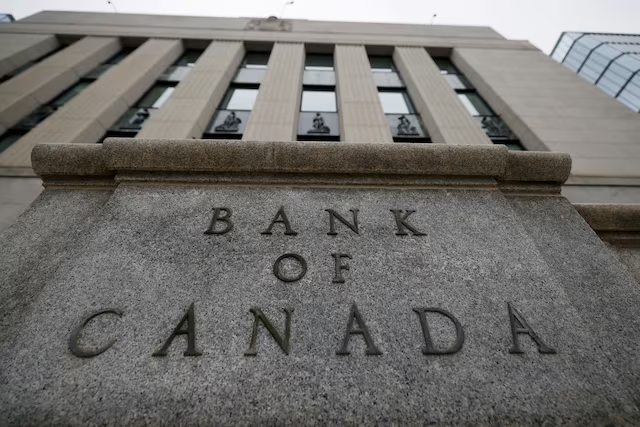
Bank of Canada Hits Pause on Rate Changes as Global Uncertainty Grows
The Bank of Canada (BoC) has decided to leave its benchmark interest rate unchanged at 2.25%, signalling that while inflation has eased, growing geopolitical tensions in the Middle East—particularly involving Iran—could complicate the path ahead.
The central bank said the Canadian economy is showing signs of resilience, but uncertainty surrounding global energy prices, trade disruptions and inflation risks means policymakers are not yet ready to reduce borrowing costs further. Financial markets were widely expecting the Bank to keep rates unchanged.
For millions of Canadians with mortgages, business loans and other debt, the latest decision means borrowing costs remain steady for now—but future cuts are far from guaranteed.
Why Did the Bank of Canada Keep Rates Unchanged?
According to the Bank of Canada, inflation has moderated compared with previous years, but risks remain.
Officials noted that while underlying inflation is moving closer to the Bank’s 2% target, global developments could quickly reverse that progress.
Among the biggest concerns are:
- Rising geopolitical tensions in the Middle East.
- Potential disruptions to global oil supplies.
- Higher energy prices feeding into inflation.
- Ongoing uncertainty in international trade and financial markets.
The Bank stressed that future decisions will depend on incoming economic data rather than a predetermined path.
How the Iran Conflict Could Affect Canadian Interest Rates
Although the conflict is taking place thousands of kilometres away, it could still affect Canadian households.
If geopolitical tensions disrupt oil production or shipping routes, crude oil prices could rise sharply.
Higher oil prices often lead to:
- More expensive gasoline.
- Higher transportation costs.
- Increased food prices.
- Rising business operating expenses.
If inflation begins climbing again because of these factors, the Bank of Canada could delay future rate cuts—or even consider raising interest rates if price pressures become persistent.
What Does This Mean for Homeowners?
For homeowners with variable-rate mortgages, the decision means monthly payments are unlikely to change immediately.
Those planning to purchase a home may continue facing relatively high borrowing costs compared with the ultra-low interest rates seen before the pandemic.
Fixed mortgage rates will continue to depend largely on bond market movements and lender expectations rather than solely on the Bank of Canada’s overnight rate.
What It Means for Businesses
Canadian businesses are also closely watching interest-rate policy.
Higher borrowing costs increase the expense of:
- Expanding operations.
- Hiring new employees.
- Purchasing equipment.
- Investing in new projects.
Many economists believe stable rates provide businesses with greater certainty, but prolonged high interest rates could continue weighing on investment and consumer spending.
Inflation Is Improving—But Not Yet Defeated
Canada has made significant progress in reducing inflation from the multi-decade highs experienced in recent years.
However, central bank officials cautioned that inflation remains vulnerable to external shocks.
Energy prices, global supply chains and geopolitical events remain among the biggest variables that could influence inflation over the coming months.
For that reason, the Bank continues to emphasise a cautious, data-driven approach.
What Economists Expect Next
Most market analysts believe the Bank of Canada will closely monitor:
- Monthly inflation reports.
- Employment data.
- Economic growth figures.
- Global energy prices.
- Developments in the Middle East.
If inflation continues easing and economic growth slows, additional rate cuts later in the year remain possible.
However, any sustained rise in oil prices or renewed inflationary pressure could delay that timeline.
SparkChronicle.com’s Perspective
The latest Bank of Canada decision reflects a delicate balancing act.
On one hand, inflation has cooled enough to justify holding rates steady. On the other, global events beyond Canada’s control—particularly geopolitical tensions affecting energy markets—continue to threaten that progress.
For consumers, the message is clear: while there is growing optimism that borrowing costs may eventually decline, uncertainty remains high. Financial planning should continue to account for the possibility that interest rates could stay elevated for longer than many expected.
Final Thoughts
The Bank of Canada’s decision to keep its benchmark rate at 2.25% offers short-term stability but leaves the door open for future policy changes.
As inflation gradually improves, attention is shifting from domestic economic indicators to global developments, especially energy markets and geopolitical risks.
For now, Canadians can expect interest rates to remain unchanged, but the path ahead will depend on how inflation and international events unfold in the months ahead.
Frequently Asked Questions
What is the Bank of Canada’s current interest rate?
The Bank of Canada has maintained its benchmark overnight interest rate at 2.25%.
Why didn’t the Bank lower interest rates?
The Bank said inflation has eased, but uncertainty surrounding energy prices, global trade and geopolitical tensions means it is taking a cautious approach before making further changes.
How could the Iran conflict affect Canada?
A prolonged conflict could increase global oil prices, leading to higher fuel, transportation and food costs. If inflation rises as a result, future interest-rate cuts could be delayed.
Will mortgage payments change?
Borrowers with variable-rate mortgages are unlikely to see immediate changes because the policy rate was left unchanged. Fixed-rate mortgages will continue to depend on broader financial market conditions.
Could interest rates increase again?
While no increase has been announced, the Bank has indicated it will respond to economic data. If inflation rises significantly, additional rate hikes cannot be ruled out.


- Prince George Poses in Sharp Suit for Official Birthday Photo as He Turns 13: Royal Lineage, Family Ties & Growing Future King Role
- Wetherspoons Issues Fourth Profit Warning in Seven Months as Rising Operating Costs and Shift in Consumer Spending Bite
- Our Hearts Are Crushed’: Hannah Rapp’s Violent Death Sparks Outpouring of Grief Across Sports World
- Former Southern Water Employees to Face Trial Over Alleged Cover-Up in Wastewater Testing; Ex-CEO Matthew Wright Named
- HMDA Launches Major Road Widening Drive: Key Corridors Around HITEC City, PVNR Expressway & KBR Park Set for Urgent Upgrades


 By
By


 idwawaslot says:

![Sun Pharma’s $11.75 Billion Organon Acquisition: A New Titan in the Top 25[2026]](https://sparkchronicle.com/wp-content/uploads/2026/04/Gemini_Generated_Image_hnub3xhnub3xhnub.png)