By Sam Khan
Published: May 16, 2026
A horrific transit accident has struck the heart of Thailand’s capital after a heavy cargo train plowed into a public bus at a busy downtown railway crossing. The violent impact dragged multiple vehicles across the tracks and triggered a fast-moving inferno that completely engulfed the passenger bus.
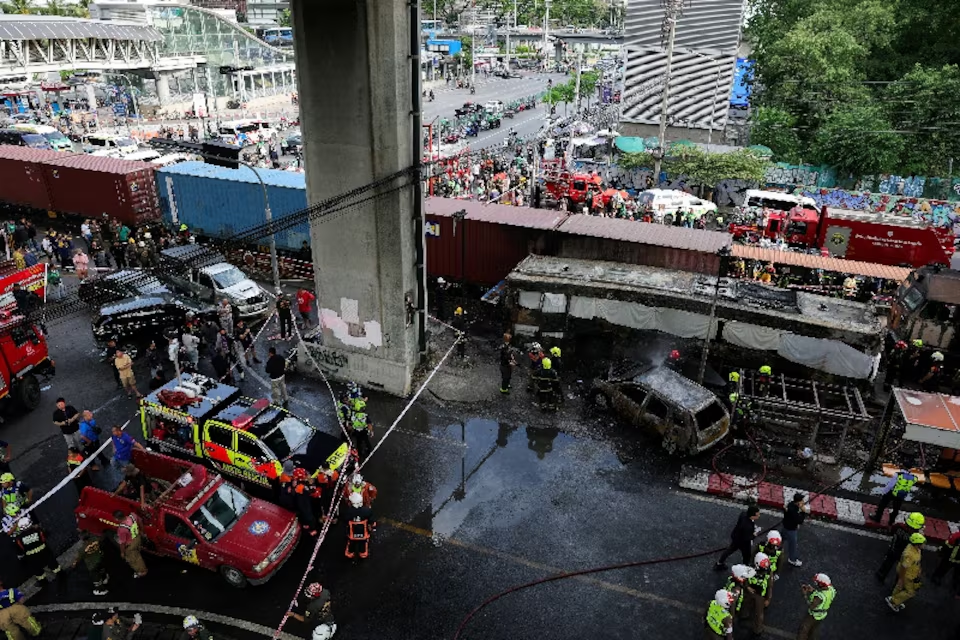
According to emergency rescue officials and the Bangkok Metropolitan Police, the disaster has left at least eight people dead and 25 others injured, with several victims remaining in critical condition. The tragedy has ground central Bangkok to a halt and raised urgent structural questions regarding the safety protocols of the city’s urban rail intersections.
ALSO READ : Strategic Energy Reserve Expansion: India Eyes Record 30-Million-Barrel Petroleum Stock in UAE
The Incident: A Sudden Impact on Asok-Din Daeng Road
The catastrophic collision occurred during the peak afternoon hours at approximately 3:40 PM local time on Saturday, May 16, 2026.
The scene of the accident was a major railway crossing on Asok-Din Daeng Road, located in Bangkok’s bustling Ratchathewi district, situated directly between the Rama IX and Asok-Phetchaburi intersections. The crossing is heavily populated as it sits directly beneath the tracks of the city’s Airport Rail Link (Makkasan Station), a hub used by tens of thousands of commuters daily.
Bangkok Crossing Crash Sequence:
[Traffic Halt]       Line of cars & motorcycles stop at the Asok-Din Daeng crossing.
      └── [The Impact]     Cargo train strikes an orange public bus at moderate speed.
            └── [The Inferno]    Bus is dragged along tracks, triggering explosions & a massive fire.
Dashcam footage and social media videos capturing the exact moment of the crash show a dense line of commuter traffic halted at the tracks. As a slow-moving freight train approached the crossing, it slammed directly into the side of a prominent orange public bus positioned at the front of the queue.
Explosions, Fire, and the Emergency Rescue Act
The sheer force of the collision caused a chain reaction. The train dragged the heavy public bus along the tracks, crushing several adjacent cars and knocking over multiple motorcycles. Within seconds of the impact, a series of sharp explosions echoed through the street as the bus’s fuel framework ruptured, completely engulfing the vehicle in massive flames.
The Emergency Scramble
The Phayathai Fire and Rescue Station, alongside paramedics from the Erawan Medical Centre, scrambled a massive response fleet to the scene. Firefighters battled the raging blaze with high-pressure water hoses to prevent the fire from spreading to the overhead Airport Rail Link infrastructure, while rescue teams raced to pull screaming passengers out of the crushed cars and shattered motorcycle pile-ups.
Once the fire was brought under control and the thick smoke cleared, rescuers entered the charred, hollowed-out shell of the public bus. Bangkok Police Chief Urumporn Koondejsumrit confirmed that all eight fatalities discovered at the scene were passengers trapped inside the bus who could not escape the rapid spread of the fire.
The Investigation: Did the Crossing Barriers Fail?
As forensic teams work to identify the deceased, a high-level government investigation has been launched by the Department of Rail Transport and the State Railway of Thailand (SRT).
The primary focus of the inquiry centers on whether the intersection’s mechanical safety systems failed. Eyewitnesses at the scene claimed that the automated crossing barriers—used to block motorists when a train is passing—did not lower properly, leaving the public bus and several motorcycles stranded directly in the train’s path.
Key Investigation Pillars:
1. Barrier Synchronization: Testing if the automated crossing gates failed to drop.
2. Intersection Gridlock: Analyzing if heavy traffic patterns trapped the bus on the tracks.
3. Train Braking Distance: Reviewing the freight train's speed and emergency braking logs.
Speaking to reporters from the crash site, Deputy Transport Minister Siripong Angkasakulkiat stated that it was too early to assign definitive blame:
“We are fully investigating the reports regarding the railway barriers and whether the bus stopped unexpectedly on the tracks due to gridlock. All CCTV footage from the intersection and the train’s internal data recorders are being seized to provide a clear answer.”
Final Thoughts
The heartbreaking collision on Asok-Din Daeng Road is a grim reminder of the compounding dangers present in rapidly growing megacities where heavy freight rail lines cut directly through high-density commuter traffic. While Bangkok has made significant strides in elevating its passenger transit lines, its ground-level cargo crossings remain highly volatile bottlenecks. This tragedy underscores an urgent truth: safety barriers must be entirely foolproof. Until urban rail crossings are fully automated or structurally replaced with overpasses, public commuters will continue to face unnecessary risks on their daily travels.
Frequently Asked Questions (FAQs)
1. What caused the train collision in Bangkok on May 16, 2026?
A freight cargo train collided with a public transit bus at a ground-level railway crossing on Asok-Din Daeng Road, triggering a secondary fire that destroyed the bus and impacted surrounding traffic.
2. How many casualties have been confirmed from the accident?
Authorities have officially confirmed eight deaths and at least 25 injuries. All deceased victims were passengers inside the public bus.
3. Where exactly did the collision happen?
The accident occurred in the Ratchathewi district of central Bangkok, near the Airport Rail Link’s Makkasan Station, a highly congested commercial zone.
4. Did the railway safety gates fail to close?
This is currently the core focus of the government’s investigation. Eyewitnesses report the gates may not have lowered correctly, but transport officials are still verifying the mechanical logs.
5. What other vehicles were caught up in the crash?
In addition to the cargo train and public bus, the accident crushed several private cars and threw multiple motorcycles and their riders onto the asphalt, contributing to the high injury count.

- Prince George Poses in Sharp Suit for Official Birthday Photo as He Turns 13: Royal Lineage, Family Ties & Growing Future King Role
- Wetherspoons Issues Fourth Profit Warning in Seven Months as Rising Operating Costs and Shift in Consumer Spending Bite
- Our Hearts Are Crushed’: Hannah Rapp’s Violent Death Sparks Outpouring of Grief Across Sports World
- Former Southern Water Employees to Face Trial Over Alleged Cover-Up in Wastewater Testing; Ex-CEO Matthew Wright Named
- HMDA Launches Major Road Widening Drive: Key Corridors Around HITEC City, PVNR Expressway & KBR Park Set for Urgent Upgrades


 By
By


![Sun Pharma’s $11.75 Billion Organon Acquisition: A New Titan in the Top 25[2026]](https://sparkchronicle.com/wp-content/uploads/2026/04/Gemini_Generated_Image_hnub3xhnub3xhnub.png)