
Author: Lucky Brothers
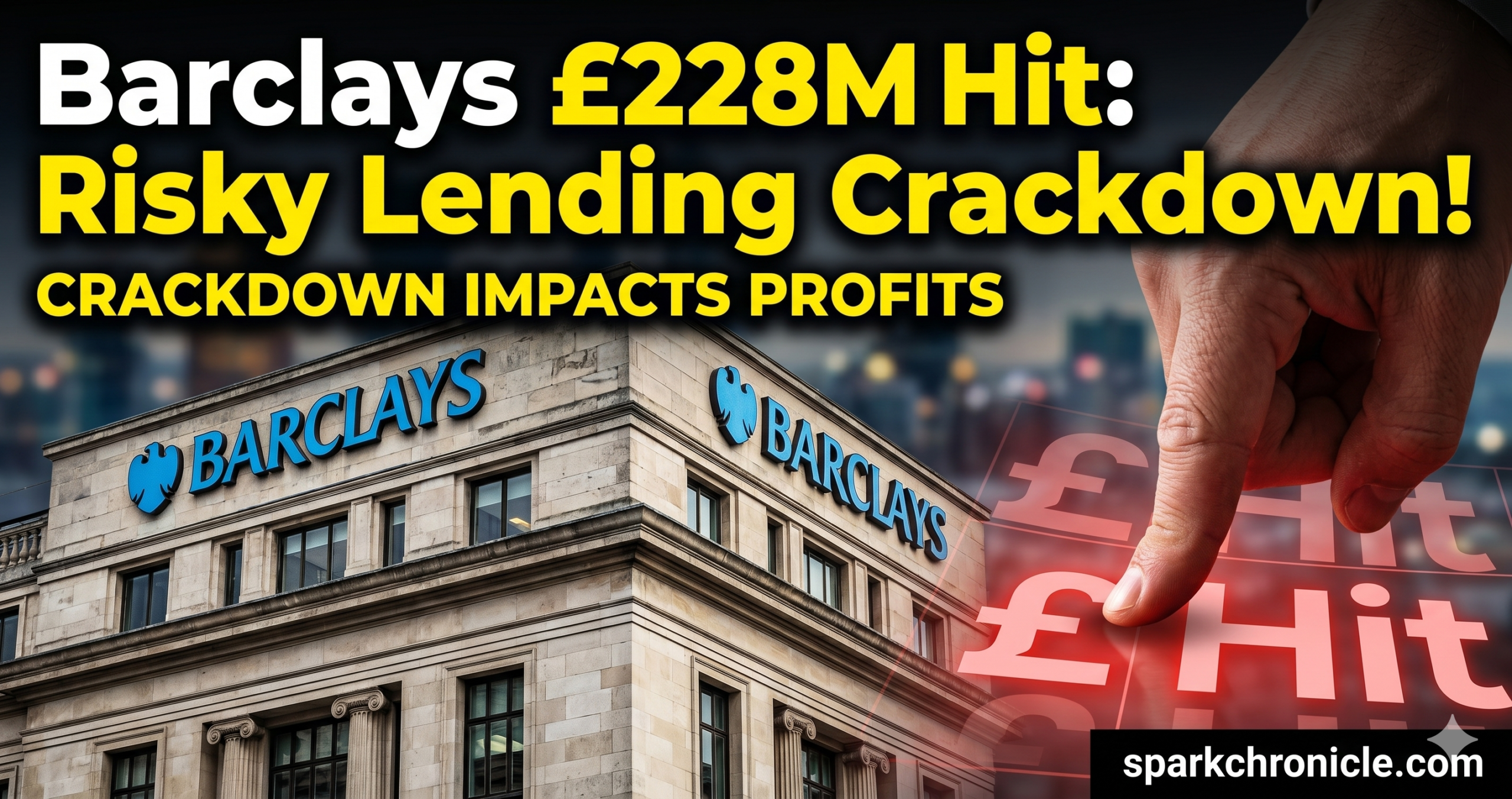
The first quarter of 2026 has proven to be a period of both record-breaking success and sobering lessons for Barclays. While the bank celebrated its investment banking income topping £4 billion for the first time, the headlines were dominated by a different figure: a £228 million write-off linked to the spectacular failure of Market Financial Solutions (MFS).
This hit has forced the hand of Barclays CEO C.S. Venkatakrishnan, who has announced a major crackdown on lending to “risky borrowers.” The decision marks a critical turning point in the bank’s risk management strategy, coming at a time when the $2 trillion private credit industry is facing unprecedented scrutiny from global regulators.

The Collapse of MFS: A £1.3 Billion Scandal
Market Financial Solutions, a Mayfair-based lender specializing in short-term property loans, collapsed into insolvency in February 2026. What began as a standard business failure quickly spiraled into a scandal involving allegations of fraud and “double-pledging” of assets—a deceptive practice where the same property is used as collateral for multiple loans simultaneously.
Barclays was the largest single creditor exposed to the fallout, with an initial exposure of approximately £500 million. While the bank managed to mitigate some losses, the resulting £228 million charge pushed its total credit impairment charges for the quarter to £823 million. This event has served as a wake-up call, highlighting the hidden dangers in the “shadow banking” sector.
Why Barclays is Cutting Back on Risky Lending
The decision to restrict credit isn’t just about the money lost; it’s about the systemic difficulty of identifying fraud before it happens. In his address to shareholders, Venkatakrishnan noted that “vulnerable business models” often hide their weaknesses until the economic cycle takes a downturn.
- Strengthening Financial Controls: Barclays will now only extend credit to structured finance counterparties that can demonstrate “robust and independent” financial controls.
- Targeting Niche Players: The bank is specifically backing away from niche entities operating in parts of the market that are cyclically vulnerable.
- The Fraud Red Flag: This isn’t an isolated incident. Following a £110 million loss last year from the US sub-prime lender Tricolor, Barclays has identified a pattern where high-risk lending and poor oversight lead to catastrophic fraud cases.
The Pivot to Stability and Young Generations
Paradoxically, while Barclays is pulling back from the high-risk institutional side, it is doubling down on its domestic UK retail market. The bank’s 2026 strategy is heavily focused on making homeownership more accessible for first-time buyers and Gen Z.
By shifting capital away from risky structured finance and toward traditional mortgages, Barclays is attempting to build a “steadier” business model. Their latest data shows that nearly 34% of Gen Z adults hope to buy a home in 2026. By lowering deposit requirements and offering innovative mortgage products, the bank aims to capture this emerging market while maintaining a much safer risk profile than the one seen in the MFS scandal.
The Broader Market Impact: Why Investors are Watching
The “MFS effect” is being felt across the financial landscape of the UK. Investors are closely monitoring how Barclays and its peers (like HSBC and Lloyds) manage their exposure to the private credit market.
- Regulator Scrutiny: The Financial Conduct Authority (FCA) has launched a full enforcement investigation into MFS, raising fears that more “skeletons in the closet” may be found in the private credit space.
- Economic Pressures: With the ongoing Iran-Israel conflict and rising oil prices adding to inflation, banks are under pressure to prove their balance sheets are “fraud-proof.”
- The Shift to Hyderabad and Andhra Pradesh: Interestingly, as Western banks tighten their belts, global capital is looking toward high-growth tech hubs in India (like the Google AI hub in Vizag) where the focus is on infrastructure and technology rather than complex financial maneuvering.
Final Thoughts from Lucky Brothers
The £228 million hit from MFS is a stark reminder that even the biggest banks are not immune to the risks of the shadow banking world. By choosing to “constrain lending” to certain counterparties, Barclays is prioritizing long-term stability over short-term gains. For the average consumer and young homebuyer, this is actually good news—it means a bank that is more focused on traditional service and less on the “risky bets” that led to the 2008 financial crisis.
Frequently Asked Questions (F&Q)
- What was the “double-pledging” issue with MFS?It is an alleged fraud where a lender uses the same property as security to get loans from multiple different banks at the same time, artificially inflating their borrowing power.
- How much did Barclays lose in total from MFS?The bank took a £228 million hit in the first quarter of 2026, though its initial exposure was as high as £500 million.
- Will this affect normal mortgage applications at Barclays?No. The “risky lending” refers to loans given to other financial firms (structured finance). Barclays is actually looking to grow its standard mortgage business for first-time buyers.
- Who else was affected by the MFS collapse?Other major creditors included Atlas SP Partners (owned by Apollo) and hedge funds like Elliott Management, with the total scandal estimated at £1.3 billion.
- Is the UK government investigating?Yes, the Financial Conduct Authority (FCA) has opened a formal enforcement investigation into MFS and its founder, Paresh Raja.


- Prince George Poses in Sharp Suit for Official Birthday Photo as He Turns 13: Royal Lineage, Family Ties & Growing Future King Role
- Wetherspoons Issues Fourth Profit Warning in Seven Months as Rising Operating Costs and Shift in Consumer Spending Bite
- Our Hearts Are Crushed’: Hannah Rapp’s Violent Death Sparks Outpouring of Grief Across Sports World
- Former Southern Water Employees to Face Trial Over Alleged Cover-Up in Wastewater Testing; Ex-CEO Matthew Wright Named
- HMDA Launches Major Road Widening Drive: Key Corridors Around HITEC City, PVNR Expressway & KBR Park Set for Urgent Upgrades


 By
By




![Sun Pharma’s $11.75 Billion Organon Acquisition: A New Titan in the Top 25[2026]](https://sparkchronicle.com/wp-content/uploads/2026/04/Gemini_Generated_Image_hnub3xhnub3xhnub.png)