Great Britain has recorded its biggest drop in petrol purchases in six years, contributing to weaker retail sales. Here’s why fuel spending fell and what it means for consumers and the economy.
By Sam Khan
Published: May 22, 2026
Retail sales in United Kingdom have come under fresh pressure after Great Britain recorded its biggest fall in petrol purchases in six years, raising concerns about slowing consumer spending and wider economic uncertainty.
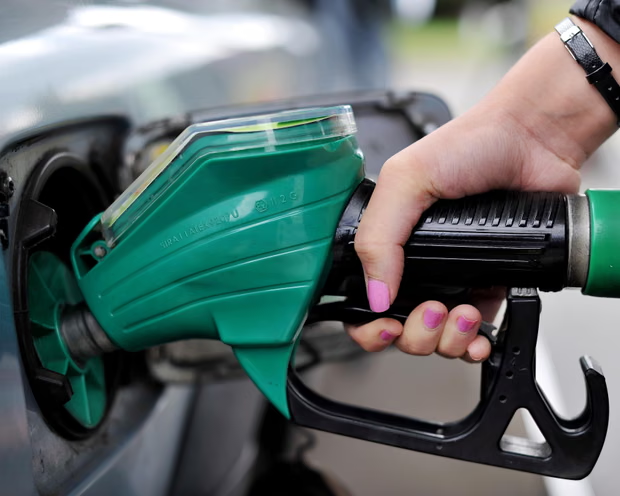
The decline in fuel purchases contributed to weaker retail performance, according to newly released economic figures, with analysts suggesting changing consumer behaviour, rising living costs, and reduced travel activity may all be playing a role.
The development has sparked debate about whether British households are becoming more cautious with spending as financial pressures continue affecting budgets across the country.
ALSO READ : Rachel Reeves Cuts VAT on Theme Parks, Zoos and Kids’ Meals – But Critics Say Cost-of-Living Help Doesn’t Go Far Enough
What Happened?
Recent retail data showed a significant drop in fuel sales, marking the largest decline in petrol purchasing since 2020 outside pandemic-related disruptions, making it effectively the biggest normal decline in six years.
Economists say petrol stations experienced weaker sales volumes despite fluctuations in fuel prices, indicating consumers may simply be driving less or cutting discretionary spending.
The slowdown also weighed on overall retail figures across Great Britain, highlighting concerns that households are becoming increasingly careful about non-essential spending.
Why Are Petrol Purchases Falling?
Several factors appear to be contributing to the decline.
1. Cost-of-Living Pressures
Many British households continue managing pressure from:
- Higher housing costs
- Energy bills
- Food inflation
- Mortgage repayments
As budgets tighten, consumers often reduce unnecessary journeys to save fuel costs.
For many families, driving less has become one of the easiest ways to cut expenses.
2. Remote and Hybrid Working
The rise of flexible work arrangements is also affecting fuel demand.
Many employees no longer commute daily, reducing weekly petrol consumption significantly compared with pre-pandemic years.
Hybrid work patterns remain common across sectors such as:
- Finance
- Technology
- Administration
- Professional services
This structural shift may be permanently changing fuel demand in Britain.
3. More Fuel-Efficient Vehicles
Britain’s growing adoption of:
- Electric vehicles (EVs)
- Hybrid cars
- Fuel-efficient engines
may also be contributing to weaker petrol station sales.
Government policies promoting lower-emission transport have accelerated EV adoption across the UK over recent years.
While petrol cars still dominate overall road use, fuel consumption patterns are slowly changing.
4. Reduced Consumer Confidence
Economic uncertainty may also be discouraging leisure spending and travel.
Analysts say weaker petrol demand can sometimes reflect reduced confidence, as households delay non-essential trips, holidays, and recreational driving.
Consumers often become more conservative during periods of financial uncertainty.
Retail Sector Feeling the Pressure
The petrol decline comes as broader retail spending across Great Britain faces mixed conditions.
While some sectors continue performing relatively strongly, others have struggled due to cautious spending patterns.
Areas seeing pressure include:
- Clothing sales
- Home improvement purchases
- Big-ticket consumer goods
At the same time, discount retailers and supermarkets focused on lower prices have generally remained more resilient.
Retail analysts say consumers are increasingly prioritising essentials over discretionary purchases.
What It Could Mean for the Economy
Fuel sales are often viewed as a useful indicator of economic activity.
Lower petrol demand can sometimes suggest:
- Reduced commuting
- Lower consumer mobility
- Weaker spending confidence
- Slower economic activity
However, economists caution against assuming a major downturn purely from fuel data alone.
Some experts argue reduced petrol purchases may partly reflect positive structural changes such as:
- Remote work flexibility
- Greener transport habits
- Increased public transport use
In other words, falling petrol sales do not always automatically mean economic weakness.
Fuel Prices Still Matter
Petrol prices remain a politically sensitive issue in Britain.
Even modest price increases often affect household confidence because fuel directly influences:
- Daily commuting costs
- Food transportation costs
- Delivery expenses
- Inflation expectations
Many drivers continue watching fuel prices closely, especially after years of economic volatility linked to global energy markets.
Public Reaction
Online reactions have been divided.
Some Britons say they are intentionally driving less to save money amid continuing financial pressures.
Others believe the decline simply reflects changing lifestyles and increased home working.
There is also growing discussion about whether Britain’s transition toward electric vehicles will gradually reshape the retail fuel market permanently.
Perspective
The sharp fall in petrol purchases offers an interesting snapshot of how Britain is changing.
Part of the decline likely reflects economic caution and cost-of-living stress. But another part may simply represent a country adapting to new habits — hybrid work, greener transport, and different commuting patterns.
The bigger question for retailers and policymakers is whether weaker fuel spending signals broader consumer weakness or merely a shift in how people live and travel.
That answer could become clearer over the coming months as retail and economic trends continue developing.
Frequently Asked Questions (FAQs)
1. Why are petrol purchases falling in Great Britain?
Factors include cost-of-living pressures, remote work, fuel-efficient vehicles, and cautious consumer spending.
2. Is this the biggest petrol decline in years?
Yes, reports describe it as the biggest normal fall in petrol purchases in around six years.
3. Does lower petrol demand mean the economy is slowing?
Not necessarily. It may reflect both economic caution and changing travel habits.
4. Are electric vehicles affecting petrol sales?
Yes, growing EV adoption is gradually reducing traditional petrol demand.
5. Why are retail sales affected?
Fuel purchases are included in retail spending figures, meaning lower petrol sales can drag down overall retail performance.
Final Thoughts
Britain’s biggest fall in petrol purchases in six years highlights how both economic pressure and changing lifestyles are reshaping consumer behaviour.
While some see it as a warning sign for household confidence, others argue it reflects long-term changes in transport and work culture.
Either way, the numbers suggest British consumers are thinking more carefully about how — and where — they spend their money.


- Prince George Poses in Sharp Suit for Official Birthday Photo as He Turns 13: Royal Lineage, Family Ties & Growing Future King Role
- Wetherspoons Issues Fourth Profit Warning in Seven Months as Rising Operating Costs and Shift in Consumer Spending Bite
- Our Hearts Are Crushed’: Hannah Rapp’s Violent Death Sparks Outpouring of Grief Across Sports World
- Former Southern Water Employees to Face Trial Over Alleged Cover-Up in Wastewater Testing; Ex-CEO Matthew Wright Named
- HMDA Launches Major Road Widening Drive: Key Corridors Around HITEC City, PVNR Expressway & KBR Park Set for Urgent Upgrades


 By
By




![Sun Pharma’s $11.75 Billion Organon Acquisition: A New Titan in the Top 25[2026]](https://sparkchronicle.com/wp-content/uploads/2026/04/Gemini_Generated_Image_hnub3xhnub3xhnub.png)