USA: Thousands of Indian tech professionals in the US are facing uncertainty after layoffs triggered H-1B visa pressure. Here’s why the 60-day rule is causing panic and what options workers have.
By Sam Khan
Published: May 22, 2026
Thousands of Indian technology professionals working in the United States are facing growing uncertainty after fresh layoffs across the tech sector left many scrambling to find new jobs within the strict 60-day H-1B visa grace period or risk leaving the country.
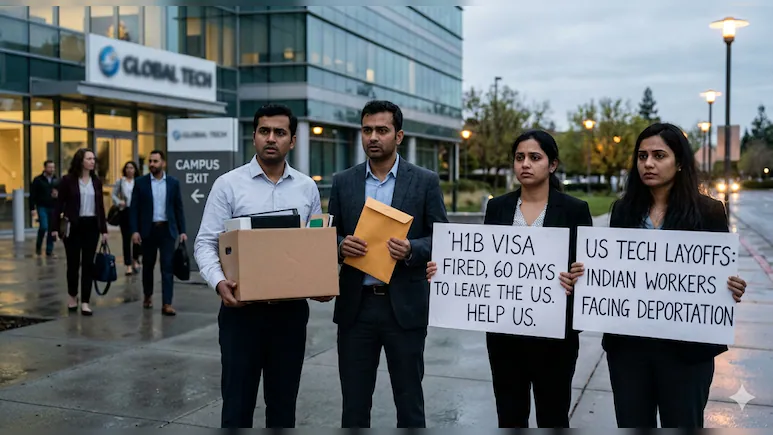
For Indian workers, who form one of the largest groups of H-1B visa holders in America, the situation has become financially, emotionally, and professionally stressful. Many had moved to the US with long-term career plans, mortgages, children in schools, and ongoing green card applications — only to suddenly face job losses in an increasingly difficult hiring market.
The issue has once again highlighted the fragile reality of employment-linked immigration systems in the US tech industry.
ALSO READ : New Zealand Faces Massive Public Sector Shake-Up as Government Plans 8,700 Job Cuts
What Is the 60-Day H-1B Rule?
The H-1B visa allows US companies to hire foreign skilled workers, especially in sectors such as:
- Software engineering
- Artificial intelligence
- Data science
- Cloud computing
- Cybersecurity
- Finance technology
Under current US immigration rules, if an H-1B worker loses their job, they generally receive a 60-day grace period to:
- Find a new employer willing to sponsor them
- Change visa status
- Leave the United States
If they fail to secure new sponsorship within that window, they may fall out of legal immigration status.
For laid-off workers, the countdown begins immediately after employment officially ends.
Why Indian Tech Workers Are Most Affected
Indian nationals dominate the H-1B system.
For years, Indian IT professionals have formed the largest share of H-1B approvals due to strong demand from:
- Silicon Valley companies
- Global consulting firms
- Financial technology businesses
- Cloud and AI sectors
Many Indian professionals spend years — sometimes decades — waiting for US green card processing because of country-specific backlogs.
That means losing a job often creates much bigger problems than unemployment alone.
For many workers, their:
- Immigration status
- Family stability
- Children’s education
- Long-term residency plans
are directly tied to continued employment.
Why Layoffs Are Happening
The pressure intensified after major layoffs across the global tech industry.
Over the past two years, companies including:
- Microsoft
- Amazon
- Meta
- Salesforce
have reduced staffing amid cost-cutting measures, AI restructuring, and slower post-pandemic hiring growth.
While some sectors continue hiring aggressively in artificial intelligence and cybersecurity, competition has become tougher for workers seeking immediate visa sponsorship.
Recruiters say many employers now hesitate to sponsor visas quickly because of legal costs and economic uncertainty.
Emotional and Financial Pressure on Families
For Indian workers in the US, layoffs often create extreme emotional pressure.
Many professionals have:
- Bought homes
- Taken education loans
- Relocated families
- Enrolled children in schools
Some workers reportedly receive severance pay, but immigration timelines continue regardless of financial support.
Families also face difficult questions such as:
- Whether children must leave schools
- Whether spouses can continue working
- Whether mortgages and rents remain manageable
- Whether years spent building US careers could suddenly end
For workers already stuck in lengthy green card queues, layoffs feel particularly devastating.
Why the Green Card Backlog Makes It Worse
One major problem affecting Indian H-1B workers is the massive employment-based green card backlog.
Because US immigration law limits the number of green cards available per country each year, Indian applicants often face waiting periods stretching many years.
Some immigration experts estimate certain employment categories could involve waits exceeding a decade.
As a result, even highly experienced professionals with stable careers remain dependent on employer sponsorship for long periods.
That dependency creates vulnerability during layoffs.
What Options Do Laid-Off H-1B Workers Have?
Immigration lawyers say affected workers usually explore several possible paths:
1. Find a New Sponsor Quickly
The most common solution is securing another job offer from a company willing to transfer the H-1B sponsorship.
2. Change Visa Category
Some workers switch temporarily to:
- Student visas
- Dependent visas
- Visitor status
to remain legally in the US while searching for opportunities.
3. Remote Work From India
A growing number of companies now allow laid-off employees to continue working remotely from India until visa situations stabilize.
4. Return to India
Some professionals eventually relocate back to India, especially as the Indian technology sector continues expanding rapidly.
Indian Tech Sector Seeing Reverse Migration
Interestingly, India’s own technology industry has become far stronger than it was a decade ago.
Cities like:
- Hyderabad
- Bengaluru
- Pune
- Gurugram
now host major global technology operations, AI research centres, and startup ecosystems.
Some returning professionals are finding high-paying opportunities in India, though salaries and lifestyle adjustments can still feel significant after years in the US.
Debate Around US Immigration Policy
The H-1B system has long remained politically controversial in America.
Critics argue the program can:
- Increase dependence on employer sponsorship
- Create worker vulnerability
- Suppress wages in some sectors
Supporters, however, say skilled immigrants are essential for innovation and economic growth.
Indian professionals have played major roles in America’s tech success story, with many eventually becoming founders, executives, and innovators.
But the latest layoffs are renewing questions about whether the immigration system places too much power in the hands of employers.
Perspective
The current H-1B crisis is not simply about visas.
It is about uncertainty.
For many Indian tech professionals, years of education, career-building, and personal sacrifice can suddenly feel unstable because immigration status remains tied to employment.
At the same time, the situation reflects broader changes happening across the global technology industry, where rapid AI-driven transformation and corporate restructuring are reshaping careers worldwide.
The challenge now is whether the system can evolve to provide more stability for highly skilled workers who contribute significantly to the American economy.
Frequently Asked Questions (FAQs)
1. What is the H-1B 60-day rule?
Laid-off H-1B visa holders usually have 60 days to find a new sponsor, change visa status, or leave the US.
2. Why are Indian tech workers heavily affected?
Indian nationals form the largest group of H-1B visa holders in the United States.
3. Which companies have laid off workers recently?
Major technology firms including Google, Amazon, Meta, and Microsoft have reduced staff in recent years.
4. Why is the green card backlog important?
Many Indian workers face very long waits for permanent residency, making them dependent on employer sponsorship for years.
5. Can laid-off H-1B workers stay in the US legally?
Yes, but usually only temporarily unless they secure new sponsorship or change immigration status.
Final Thoughts
For thousands of Indian professionals, the American dream increasingly comes with uncertainty tied to immigration rules and corporate restructuring.
The latest wave of layoffs has exposed how vulnerable even highly skilled workers can become when legal residency depends entirely on employment status.
While some workers will successfully transition into new opportunities, others may face difficult decisions about leaving the US after years spent building careers and lives there.
The debate over H-1B reform is likely to grow louder as the technology industry continues changing at a rapid pace.

- Prince George Poses in Sharp Suit for Official Birthday Photo as He Turns 13: Royal Lineage, Family Ties & Growing Future King Role
- Wetherspoons Issues Fourth Profit Warning in Seven Months as Rising Operating Costs and Shift in Consumer Spending Bite
- Our Hearts Are Crushed’: Hannah Rapp’s Violent Death Sparks Outpouring of Grief Across Sports World
- Former Southern Water Employees to Face Trial Over Alleged Cover-Up in Wastewater Testing; Ex-CEO Matthew Wright Named
- HMDA Launches Major Road Widening Drive: Key Corridors Around HITEC City, PVNR Expressway & KBR Park Set for Urgent Upgrades


 By
By




![Sun Pharma’s $11.75 Billion Organon Acquisition: A New Titan in the Top 25[2026]](https://sparkchronicle.com/wp-content/uploads/2026/04/Gemini_Generated_Image_hnub3xhnub3xhnub.png)