
By Sam Khan
Published: May 16, 2026
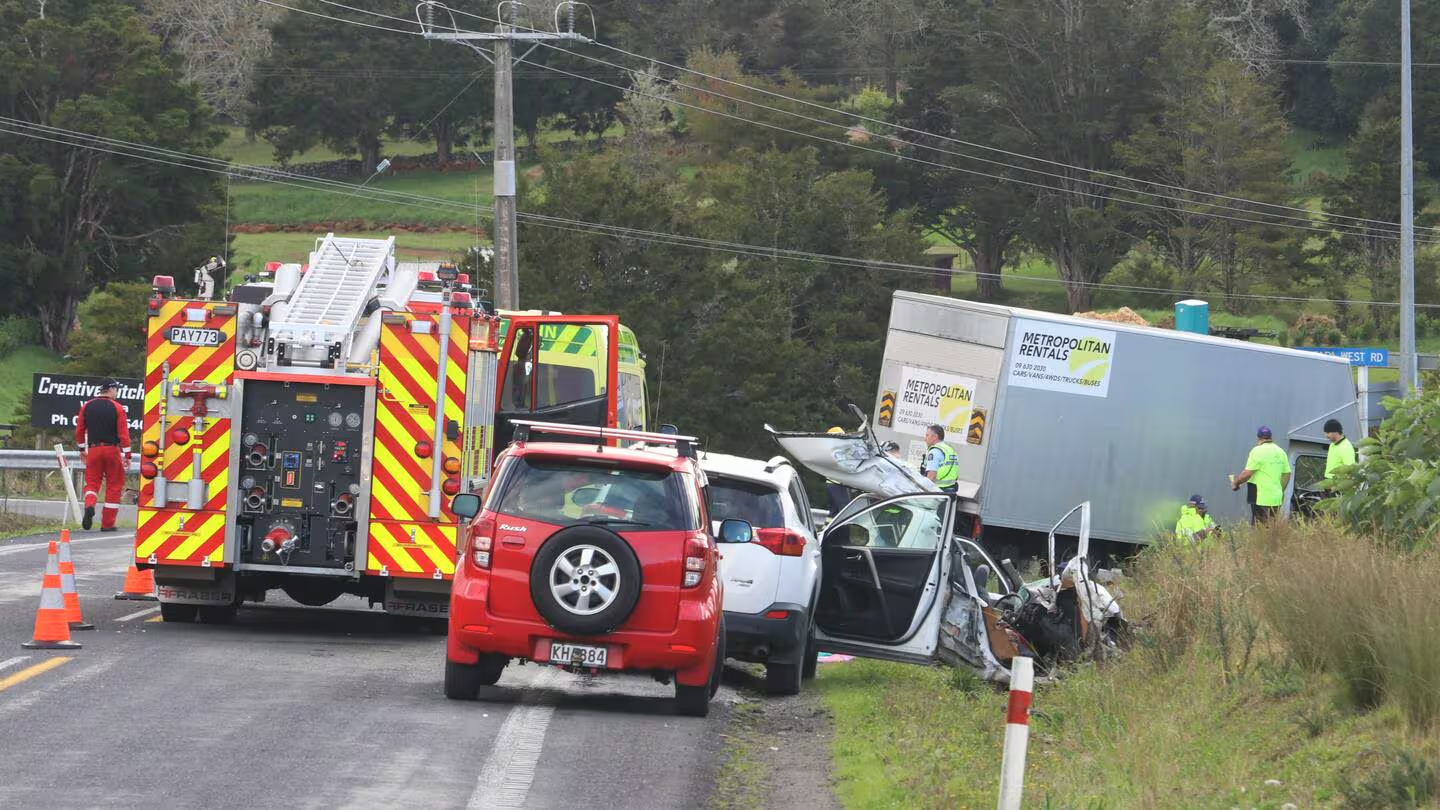
Frustrated residents in Northland’s Far North are expressing deep anger and anxiety over what they describe as a structural “death trap” on State Highway 10. Newly released crash statistics have confirmed the severe danger of a notorious black spot, revealing dozens of collisions and injuries over a short stretch of road.
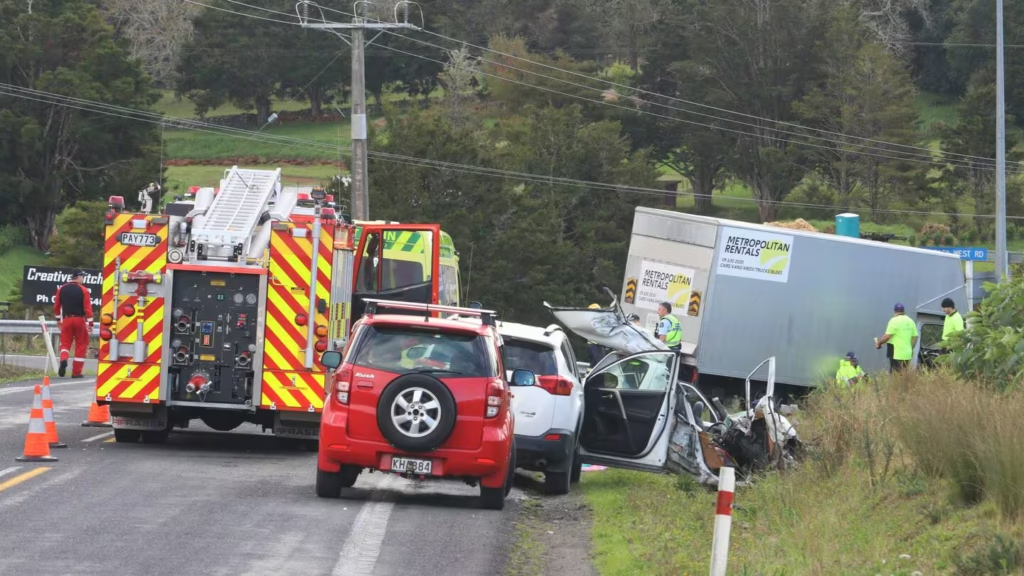
Despite the alarming data and a history of serious accidents, the New Zealand Transport Agency (NZTA) Waka Kotahi has confirmed that there are currently no safety upgrades or physical fixes planned for the high-risk intersection. The news has sparked sharp backlash from locals who fear it is only a matter of time before another life is lost.
ALSO READ : Tragic Morning on Waitematā Harbour: Kayaker Dies Following Medical Emergency in Auckland
The Grim Statistics: A Breakdown of the Crash Data
The primary focus of local frustration is the intersection of SH10 and Waipapa West Road, located just north of the commercial hub of Waipapa.
Fresh historical data pulled from the NZTA crash analysis system highlights a pattern of ongoing danger:
- The Black Stretch: Over a recent five-year reporting window, there have been 33 recorded crashes along a brief 2.9km stretch of SH10 between Stanners Road and Waipapa Road—a zone that directly encompasses the Waipapa West Road turnoff.
- The Casualties: These 33 accidents resulted in 39 injuries overall. Among the victims, one person lost their life, eight individuals suffered severe or life-altering injuries, and 30 sustained minor injuries.
- Recent Escalations: Emergency services have repeatedly been called to the site. In June 2025, a violent two-vehicle smash left two people seriously injured. This followed an August 2024 collision that hospitalized three people, and a critical two-vehicle crash in 2023.
Why is the Waipapa West Road Intersection So Dangerous?
Local residents who navigate the 100km/h open-road zone daily state that the physical infrastructure of the intersection leaves absolutely no room for human error.
SH10 / Waipapa West Rd Design Flaws:
[100km/h Main Highway] ──► No Dedicated Turning Bay / Slip Lane
                                 ├── Turning vehicles slow down abruptly
                                 └── Impatient trailing drivers swerve & cross double lines on a blind hill
1. Lack of a Turning Bay or Wide Shoulder
The critical design flaw at the Waipapa West Road junction is the complete absence of a dedicated flush median or turning lane. When a northbound motorist slows down to turn right into Waipapa West Road, they are forced to come to a near-stop directly in the live 100km/h traffic lane.
2. The Overtaking Domino Effect
Because the intersection sits on a rolling hill near a blind corner, trailing drivers frequently grow impatient with turning vehicles. Witness accounts reveal that drivers regularly swerve around turning cars, crossing over the center line into oncoming traffic, resulting in catastrophic head-on or T-bone collisions.
3. Increased Heavy Vehicle Traffic
Locals point out that the volume of heavy freight trucks and logging transports on SH10 has scaled up significantly over the last few years, adding compounding weight and speed to an already fragile rural road layout.
“Abysmal”: Residents React to NZTA’s Defunding Decision
For years, community advocate Erica Wells and other nearby residents on Ness Road have pleaded with authorities to install basic safety features. Learning that no structural modifications are on the horizon has been described by locals as “abysmal.”
“How many crashes do there have to be before something is done?” Wells questioned. “What does it take to be classified as a death trap? Because that is exactly what that highway is. At the very least, we need double yellow lines to legally stop people from overtaking on that blind corner, and high-crash area warning signs to slow traffic down.”
Another resident, Russell Beaumont, described the physical reality of using the intersection: “If you’re heading north, you have to indicate incredibly early and just pray the person behind you notices. If you’re heading south, it’s terrifying sitting in the middle of the open road trying to cut across traffic into the road.”
The Official Stance: Why is There No Fix Planned?
When questioned about the lack of development at the intersection, an NZTA spokesperson acknowledged the community’s safety anxieties but pointed directly to shifting financial parameters.
Funding for brand-new regional safety improvements has been heavily restricted under the 2024–27 National Land Transport Programme (NLTP). As the authority overseeing roughly 11,000km of state highways nationwide, NZTA stated it must ruthlessly prioritize its infrastructure budget based on nationwide risk modeling and where investments yield the highest statistical reduction in fatalities.
“We understand the concerns raised about safety at this location,” the NZTA statement read. “However, this means not every high-risk location can be addressed immediately. The site is currently being monitored.”
Local Government Stalled
The Far North District Council (FNDC) has also confirmed its hands are tied. Charlie Billington, FNDC’s Corporate Services Group Manager, noted that while local roads connect to the junction, SH10 itself falls completely under central government jurisdiction. “At this stage, the council does not have any funded projects specifically targeting this intersection. Any physical changes or safety upgrades would need to be assessed, approved, and financed by NZTA,” Billington confirmed.
Contributing Factors: Behavior vs. Design
NZTA’s underlying data indicates that while road design plays a massive part in crash severity, driver behavior remains a variable:
- Impairment: Alcohol and drugs were noted as active factors in six of the five-year crashes.
- Observation: Poor handling, misjudgment, and failure to observe oncoming vehicles contributed to 18 incidents.
- Lane Positioning: Incorrect lanes or sudden road positioning changes accounted for nine crashes.
However, residents counter that proper infrastructure—such as a simple left-hand slip lane or a wide central median—is designed specifically to absorb these exact types of human errors before they turn fatal.
Final Thoughts
The standoff between Far North residents and transport authorities reflects a wider national debate over rural road safety funding in New Zealand. While macro-level safety budgets are directed toward high-volume state highway corridors near major cities, isolated rural junctions like SH10 and Waipapa West Road continue to log mounting incident counts. For the families living alongside this stretch of highway, “monitoring” the road isn’t enough. Until a physical turning bay or speed restriction is introduced, driving home will continue to feel like running a dangerous gauntlet.
- Prince George Poses in Sharp Suit for Official Birthday Photo as He Turns 13: Royal Lineage, Family Ties & Growing Future King Role
- Wetherspoons Issues Fourth Profit Warning in Seven Months as Rising Operating Costs and Shift in Consumer Spending Bite
- Our Hearts Are Crushed’: Hannah Rapp’s Violent Death Sparks Outpouring of Grief Across Sports World
- Former Southern Water Employees to Face Trial Over Alleged Cover-Up in Wastewater Testing; Ex-CEO Matthew Wright Named
- HMDA Launches Major Road Widening Drive: Key Corridors Around HITEC City, PVNR Expressway & KBR Park Set for Urgent Upgrades

 By
By



![Sun Pharma’s $11.75 Billion Organon Acquisition: A New Titan in the Top 25[2026]](https://sparkchronicle.com/wp-content/uploads/2026/04/Gemini_Generated_Image_hnub3xhnub3xhnub.png)