Author: Luckybrother
TENERIFE, CANARY ISLANDS, May 11, 2026 – The final and most complex phase of a global repatriation operation is officially underway as a specialized medical aircraft is en route to the Canary Islands to rescue the last remaining passengers from the MV Hondius.
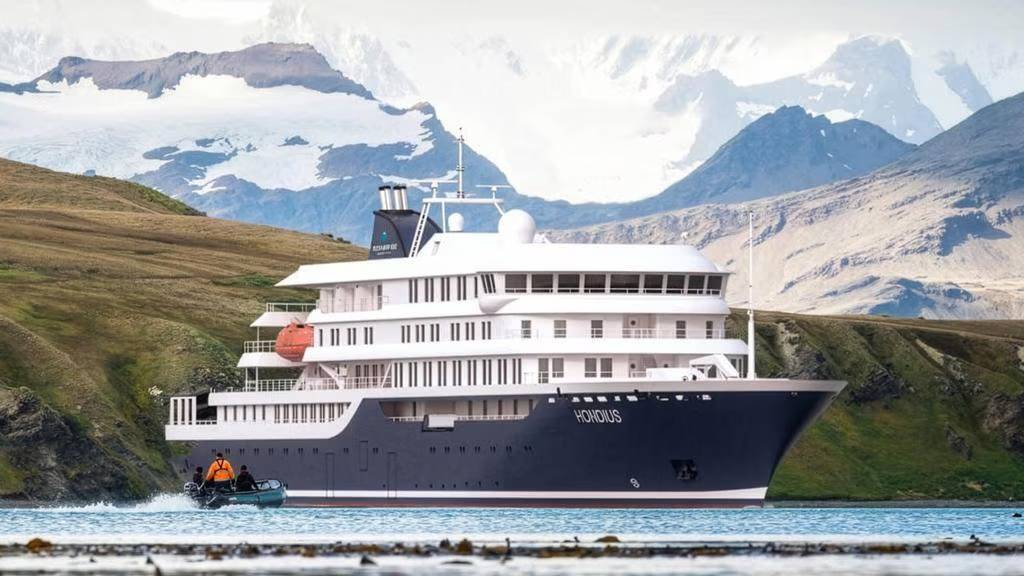
Among those waiting to be lifted from the hantavirus-stricken vessel are four Australian citizens and one permanent resident. While other nations, including the United Kingdom, United States, and the Netherlands, have already evacuated their citizens, the Australians have faced an additional night on board due to the logistical challenges of the long-haul flight from the Southern Hemisphere
ALSO READ : Archibald Prize 2026: Richard Lewer Wins $100,000 for Portrait of Anangu Elder Iluwanti Ken
The “Last Flight” Home: A Specialized Mission
Spanish Health Minister Monica Garcia confirmed on Sunday, May 10, that the Australian repatriation flight is the “final and most complex” part of the operation.
- The Schedule: The aircraft is scheduled to arrive at the Tenerife South Airport on Monday afternoon (May 11, local time).
- The Protocol: Following strict health protocols, the passengers will be transferred from the ship—currently anchored offshore near Tenerife—via small boats in groups of five. They will be taken directly to the airport runway to board the waiting plane, avoiding any contact with the local Spanish population.
- The Destination: Upon arrival in Australia, the passengers are expected to undergo a mandatory isolation period of up to 45 days, as hantavirus has a long incubation period of one to eight weeks.
Inside the Outbreak: What Happened on the MV Hondius?
The luxury Antarctic nature expedition turned into a nightmare in early May when a cluster of severe respiratory illnesses was reported. The World Health Organization (WHO) has confirmed that the outbreak was caused by hantavirus, specifically the Andes strain, which is one of the rare variants capable of human-to-human transmission.
The Toll So Far:
- Fatalities: Three people have died, including a Dutch couple and a German national.
- Infections: Eight laboratory-confirmed or suspected cases have been identified.
- The Source: Investigators believe the virus originated from the Dutch couple, who had spent months touring rodent-heavy rural areas in Argentina and Chile before boarding the ship in March.
Lessons to Learn: The New Reality of Expedition Travel
The MV Hondius tragedy serves as a “Powerhouse” reminder of the risks associated with long-term, remote travel. As global health authorities monitor the situation, several critical lessons have emerged for future cruisers:
- Health Transparency: Passengers must disclose detailed travel histories, especially if they have visited regions known for endemic viruses like hantavirus (rural South America, in this case).
- The Incubation Trap: Because hantavirus symptoms can take up to two months to appear, “feeling fine” at embarkation is not a guarantee of health.
- Repatriation Insurance: This incident highlights the necessity of high-level travel insurance that covers government-mandated medical evacuations and quarantine costs, which can run into the hundreds of thousands of dollars.
- Rodent Awareness: For those engaging in “nature expeditions” or “glamping” before a cruise, avoiding contact with rodent droppings or urine (which carry hantavirus) is a matter of life and death.
Frequently Asked Questions (FAQ)
1. Is hantavirus the next pandemic? The WHO has stated that the risk to the general global population is low. Hantavirus does not spread easily between humans; it primarily requires close, sustained contact in confined spaces, like a cruise ship.
2. Why was the Australian flight delayed? The flight was delayed due to the logistical complexity of organizing a long-range medicalized aircraft equipped for quarantine, as well as coordinating with Spanish authorities for a “tarmac-to-tarmac” transfer.
3. What happened to the MV Hondius? Once the final passengers are evacuated, the ship will sail with a skeleton crew of 30 to the Netherlands, where it will undergo a “deep-level” professional disinfection before being allowed to return to service.
4. Can I catch hantavirus from the air? Hantavirus is typically spread when particles from infected rodent waste become airborne and are inhaled. While human-to-human spread is rare, the Andes strain involved in this cluster is known to be an exception.
Final Thoughts: A Heroic Return
For the five Australians on board, the sight of the repatriation plane on the Tenerife runway will be a moment of immense relief. Their journey from the icy waters of the Antarctic to a virus-stricken quarantine in the Atlantic is a testament to the unpredictable nature of modern travel.
Do you think cruise lines should implement stricter medical screenings for passengers coming from high-risk nature zones? Share your thoughts in the comment box below!

- Prince George Poses in Sharp Suit for Official Birthday Photo as He Turns 13: Royal Lineage, Family Ties & Growing Future King Role
- Wetherspoons Issues Fourth Profit Warning in Seven Months as Rising Operating Costs and Shift in Consumer Spending Bite
- Our Hearts Are Crushed’: Hannah Rapp’s Violent Death Sparks Outpouring of Grief Across Sports World
- Former Southern Water Employees to Face Trial Over Alleged Cover-Up in Wastewater Testing; Ex-CEO Matthew Wright Named
- HMDA Launches Major Road Widening Drive: Key Corridors Around HITEC City, PVNR Expressway & KBR Park Set for Urgent Upgrades


 By
By




![Sun Pharma’s $11.75 Billion Organon Acquisition: A New Titan in the Top 25[2026]](https://sparkchronicle.com/wp-content/uploads/2026/04/Gemini_Generated_Image_hnub3xhnub3xhnub.png)