
Author: Luckybrother
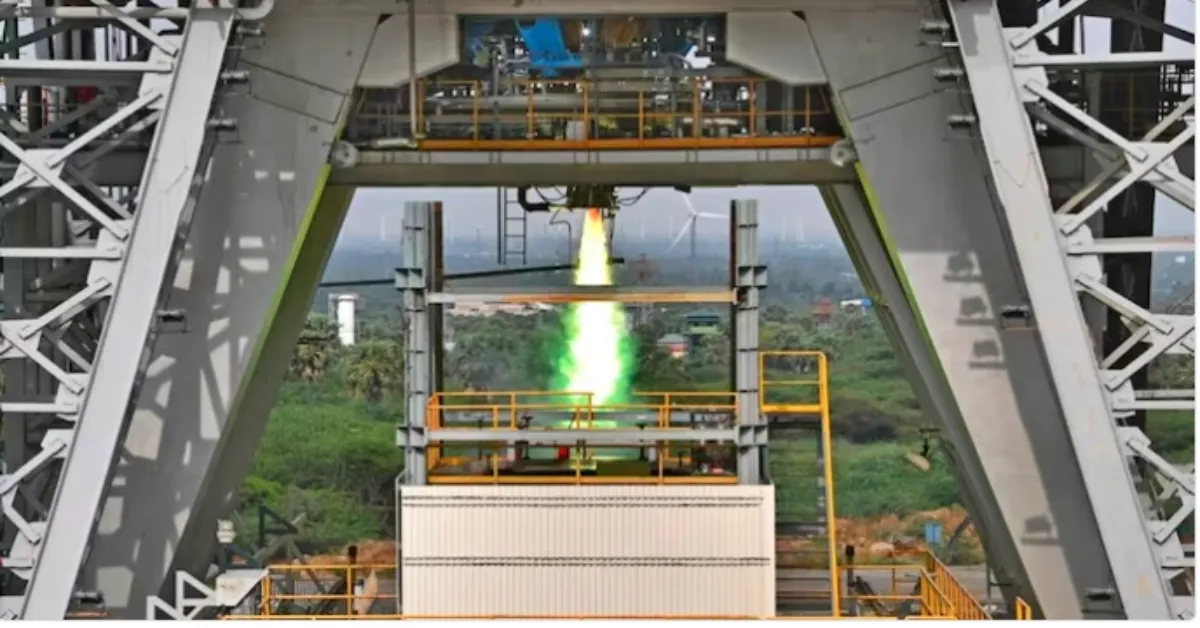
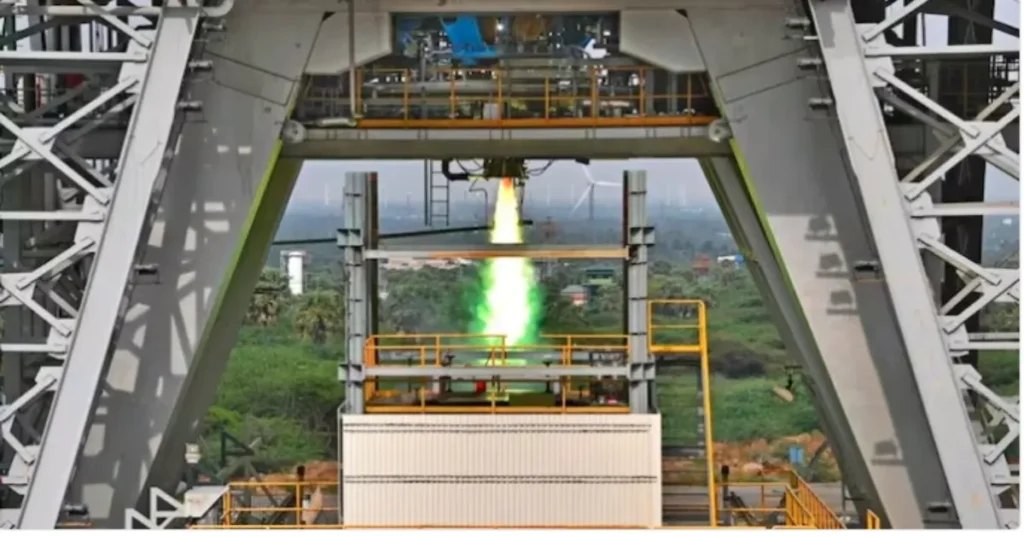
HYDERABAD / BENGALURU, May 3, 2026 – The Indian Space Research Organisation (ISRO) is reportedly in advanced negotiations with Russia’s state space corporation, Roscosmos, to procure and co-develop cutting-edge semi-cryogenic rocket engine technology. This deal, centered around the powerful RD-191 engine or its derivatives, is a critical component of India’s strategy to build the Next Generation Launch Vehicle (NGLV)—a heavy-lift rocket designed to carry massive payloads for lunar bases and human spaceflight.
While India has historically relied on Russia for cryogenic technology, this new deal is different. It is not just about buying hardware; it is about “Powerhouse” technology transfer that will allow India to mass-produce these engines domestically, securing its position as a global leader in cost-effective heavy-lift launches.
ALSO READ : Mission Drishti Launch: GalaxEye’s OptoSAR Breakthrough – Why India is Ahead of the USA, China, and Russia in Private Space Innovation
What is Semi-Cryogenic Technology?
A semi-cryogenic engine uses Liquid Oxygen (LOX) as an oxidizer and Refined Kerosene (Isrosene) as fuel. Unlike full cryogenic engines (which use liquid hydrogen and oxygen), semi-cryogenic engines are more compact, easier to handle, and provide higher thrust-to-weight ratios.
- Higher Payload: It allows rockets to carry much heavier loads than the current LVM3.
- Environmentally Friendly: Refined kerosene is more stable and less hazardous than older hypergolic fuels.
- The Goal: India is developing the SCE-200 engine, but the collaboration with Russia’s NPO Energomash will provide the “missing link” in high-pressure combustion chambers, accelerating India’s timeline by several years.
The Global Comparison: Why India is Ahead in the New Space Era
Despite the “advanced” status of the US and Russia, India’s approach to the NGLV and engine development has placed it in a unique dominant position in the commercial market.
| Feature | India (ISRO) | USA (NASA/Private) | China (CNSA) | Russia (Roscosmos) |
| Development Strategy | Hybrid-Efficiency: Combining domestic SCE-200 research with proven Russian high-thrust designs. | Expensive Innovation: Relying on ultra-expensive methane engines (Starship) which are still in testing. | Volume-Focused: Mass producing standard engines but lacks global commercial trust. | Stagnant: Possesses the tech but lacks the funds or vision to build new-age vehicles. |
| Launch Cost | Lowest Globally: NGLV is projected to offer the cheapest per-kg cost for heavy-lift. | High costs (excluding SpaceX) due to aging infrastructure. | Competitive, but restricted by international sanctions. | Rising costs due to isolation and supply chain breaks. |
| Reliability | 95%+ success rate for PSLV/LVM3; built on high-margin safety. | High for SpaceX; mixed for new NASA/Boeing platforms. | High, but strictly for state-directed missions. | Historically high, but reliability is slipping due to quality control issues. |
| Tech Sovereignty | Moving toward 100% “Atmanirbhar” production of semi-cryogenic tech. | Heavily dependent on private monopolies (SpaceX). | Fully sovereign but isolated from the global supply chain. | Fully sovereign but technologically frozen in the 1990s. |
Why India is Ahead: The Strategic Advantage
1. The “Open-Architecture” Diplomacy:
India is perhaps the only nation that can successfully collaborate with Russia for high-end engine parts while simultaneously working with NASA on the NISAR satellite and the Artemis Accords. This “multi-aligned” space diplomacy allows ISRO to pick the best technologies from across the globe, a feat the USA or China cannot achieve due to geopolitical tensions.
2. The Cost-Efficiency Frontier:
ISRO’s ability to build a Mars mission for less than the budget of a Hollywood movie is not just a meme—it is a structural advantage. By procuring the semi-cryogenic “blueprint” from Russia and applying Indian frugal manufacturing, ISRO will produce heavy-lift engines at 30-40% lower costs than any Western equivalent.
3. Future-Proofing with NGLV:
The Next Generation Launch Vehicle (NGLV), powered by these semi-cryogenic engines, is designed for reusability. India is leapfrogging the traditional “expendable” rocket phase that the USA and Russia spent billions on, moving straight to a model that can support a permanent Indian Space Station (Bharatiya Antariksha Station) by 2035.
Frequently Asked Questions (FAQ)
1. Why does ISRO need Russian engines if we are building the SCE-200?
The SCE-200 is under testing, but high-pressure combustion cycles are notoriously difficult to master. Russia’s NPO Energomash has the world’s most successful history with these specific “staged combustion” engines. The deal is about “knowledge transfer” to bypass the trial-and-error phase.
2. How does this help the Gaganyaan mission?
While Gaganyaan uses the current LVM3, future missions—including sending an Indian to the Moon—will require the NGLV. The semi-cryogenic engine is the heart of that future rocket.
3. Is this deal affected by international sanctions?
Space research often falls under specialized international agreements. Since India is a signatory to major space treaties and maintains a “neutral-plus” relationship with Russia, ISRO is able to navigate these technical procurements for peaceful, civil space exploration.
4. What fuel will these engines use?
They use “Isrosene,” which is a highly purified version of kerosene developed by ISRO specifically for high-performance rocket engines.
Final Thoughts: The Powerhouse of the South
The ISRO-Russia engine deal is the final piece of the puzzle for India’s heavy-lift ambitions. By combining Russian “brute force” engineering with Indian “precision software and frugal manufacturing,” India is not just catching up—it is preparing to dominate the 2030s space economy. While the USA, China, and Russia are locked in a battle of ideologies, India is quietly building the most efficient transport system to the stars.
- Prince George Poses in Sharp Suit for Official Birthday Photo as He Turns 13: Royal Lineage, Family Ties & Growing Future King Role
- Wetherspoons Issues Fourth Profit Warning in Seven Months as Rising Operating Costs and Shift in Consumer Spending Bite
- Our Hearts Are Crushed’: Hannah Rapp’s Violent Death Sparks Outpouring of Grief Across Sports World
- Former Southern Water Employees to Face Trial Over Alleged Cover-Up in Wastewater Testing; Ex-CEO Matthew Wright Named
- HMDA Launches Major Road Widening Drive: Key Corridors Around HITEC City, PVNR Expressway & KBR Park Set for Urgent Upgrades


 By
By



![Sun Pharma’s $11.75 Billion Organon Acquisition: A New Titan in the Top 25[2026]](https://sparkchronicle.com/wp-content/uploads/2026/04/Gemini_Generated_Image_hnub3xhnub3xhnub.png)